

Equipment care · Blog
Your grooves are losing you strokes. Here's how to fix that.
Most golfers obsess over shaft flex, loft gaps, and ball compression — then step up to a scoring iron with grooves packed with last hole's fairway. That's not bad luck. That's bad maintenance.
What grooves actually do
Grooves are not decorative. They are the mechanism. At the moment of impact, your clubface has roughly a millisecond to grip the ball — and that grip is what generates backspin. Backspin is what makes the ball climb on a clean trajectory, hold its line in wind, and stop where you intended on the green rather than skidding six feet past the flag.
When grooves are filled with dirt, grass, or sand, the face can't grip the ball. There's a layer of debris between the two surfaces. The ball slides rather than bites. You lose spin, you lose trajectory control, and you lose stopping power — all at once, every shot.
Tour caddies clean clubs after nearly every shot. That's not a ritual. That's a performance decision.
The physics are blunt: Golf Digest tested clean versus dirty grooves using a GCQuad launch monitor with a plus-2 handicapper hitting 60-degree wedge shots. Clean face averaged roughly 10,500 RPM of backspin. Dirty face averaged roughly 5,700 RPM — about half the spin, same swing, same club. Today's Golfer ran a parallel test and found backspin on a 7-iron fell by more than 52% with packed grooves. Those aren't edge cases. That's what happens every time you step up to a scoring shot without wiping your grooves first.
What you actually need
No solvents. No gadgets. Four things — and if you have a Dimple & Divot brush on your bag, you already have the important one.
How to clean your clubs — by type
Irons and wedges
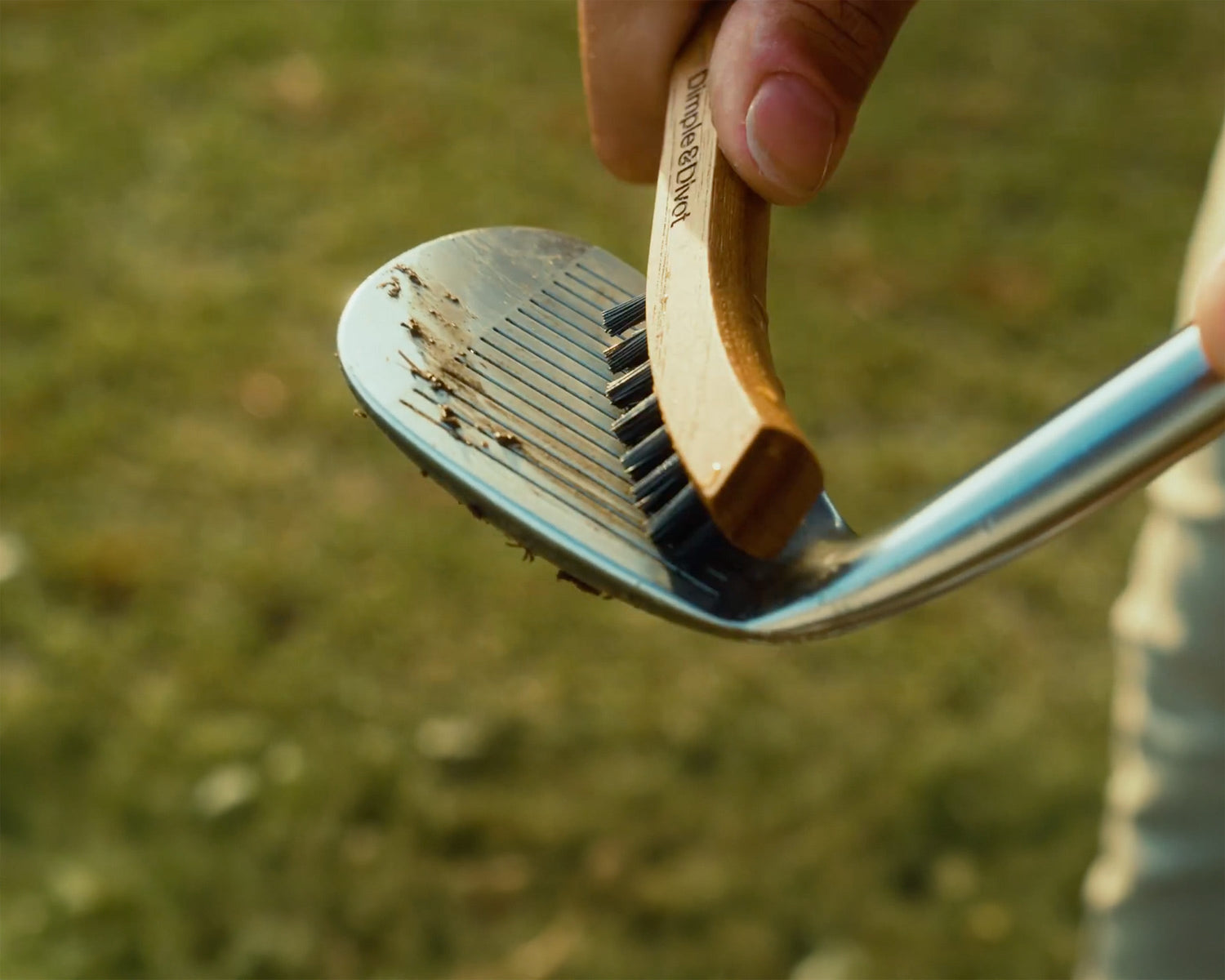
These see the most turf contact and accumulate the most debris — especially wedges, where the groove face near the leading edge takes the brunt of every dig into the turf.
Woods and drivers
Woods don't have traditional grooves — they have a milled face texture that still needs cleaning, but the process is gentler. One rule is absolute here.
Water enters through the hosel and can damage internal structures, degrade adhesive bonds, and accelerate corrosion inside hollow heads. Wipe and brush only.
Dampen a cloth or soft brush with soapy water. Wipe the face in overlapping strokes. Rinse the cloth and go over it again. Dry completely before returning to the bag.
How often — and when it actually matters
The honest answer: more often than you are now. Here's a cadence that holds up without becoming a chore.
| When | What to do |
|---|---|
| During the round | Quick brush before any scoring shot. Wipe the face with a damp towel after every shot. Two seconds, every time — it becomes automatic. |
| After every round | Full clean on all irons and wedges. Five minutes. Don't skip this, especially after wet or sandy conditions. |
| Monthly | Full soak-and-scrub routine for the whole set. Inspect groove edges visually for signs of wear while you're in there. |
| After wet or muddy conditions | Clean as soon as you're home. Mud that dries and hardens in grooves is significantly harder to remove — and more abrasive against the groove walls while it's sitting there. |
What neglect actually costs you
There's a short-term penalty and a long-term one. Most golfers only think about the first.
Short-term: dirty grooves reduce spin immediately. Your wedges release instead of stopping. Approach shots land hot and chase to the back. You're planning for a chip that should have been a tap-in. All because you didn't take two seconds before you pulled the club.
Long-term: dirt and grit act as an abrasive. Every shot with compacted debris in the grooves slowly erodes the sharp edges that generate friction. Once a groove is rounded from wear, no cleaning brings it back. The clubs you're treating carelessly right now are harder to replace than you think — especially if they're made to last.
A golf brush is not a cleaning tool. It's part of your short game.
Why the brush matters as much as the habit
A damp towel handles surface dust. It cannot clear compacted material from inside a groove channel. That requires bristles sized to fit the groove itself — stiff enough to dislodge debris, precise enough not to damage the groove wall.
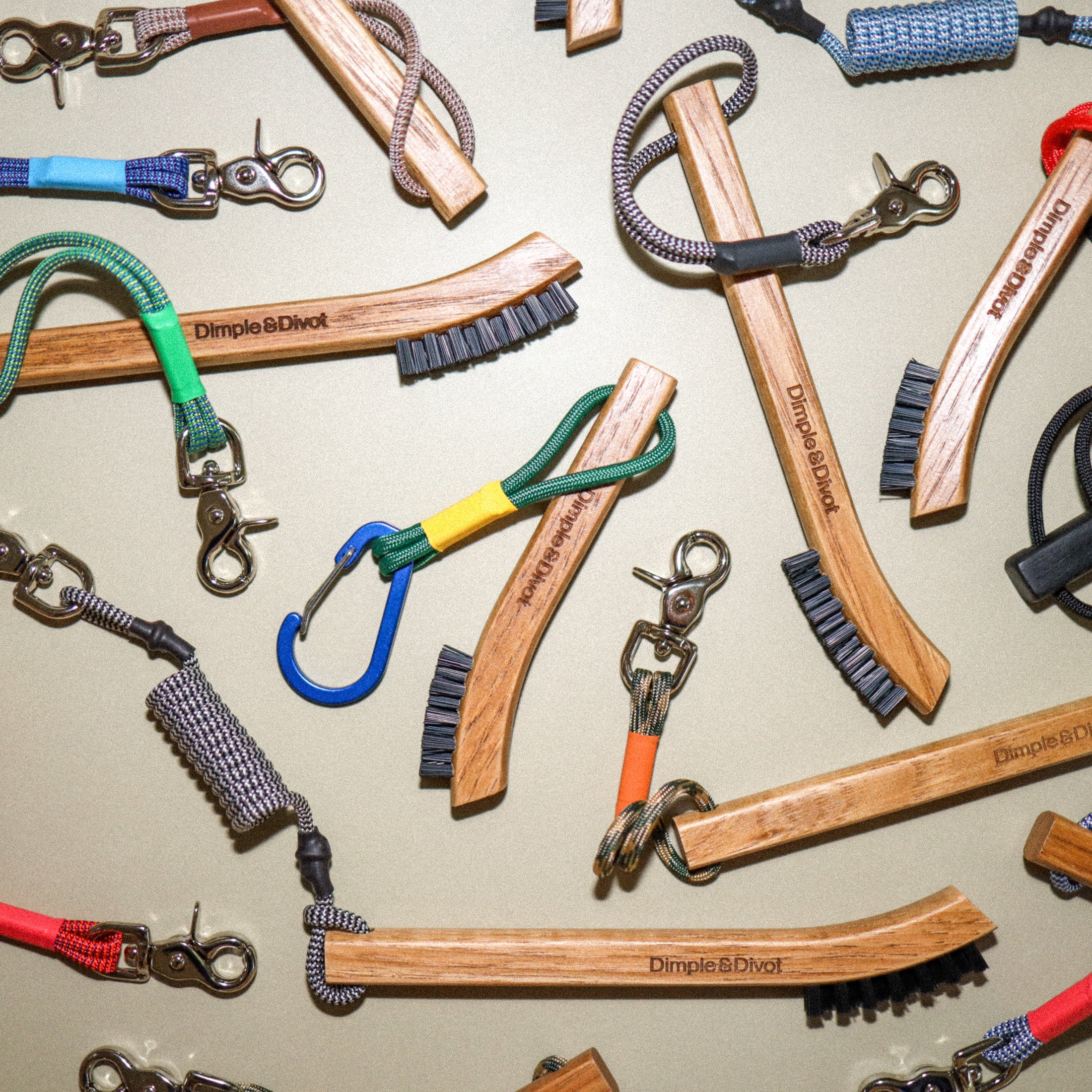
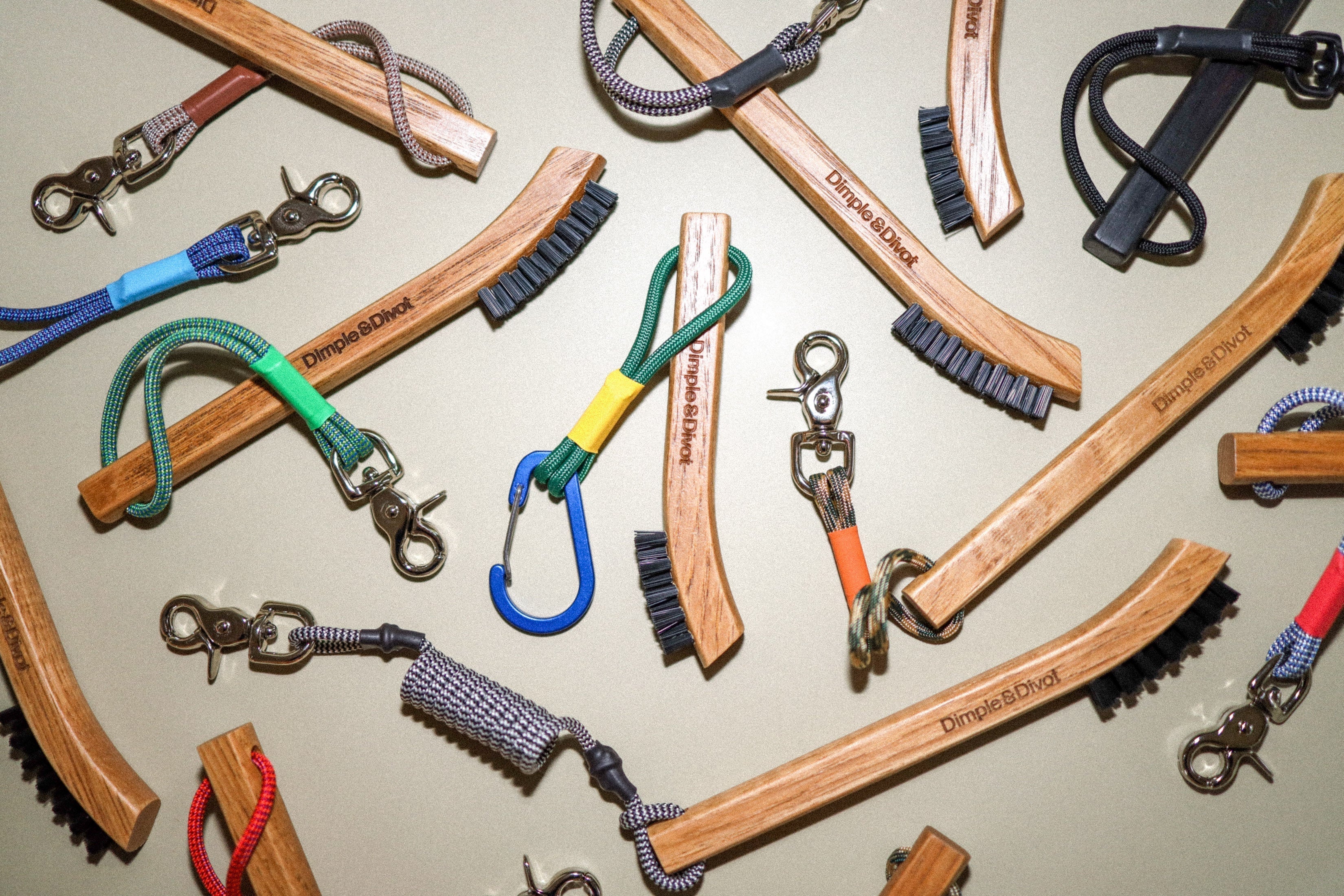
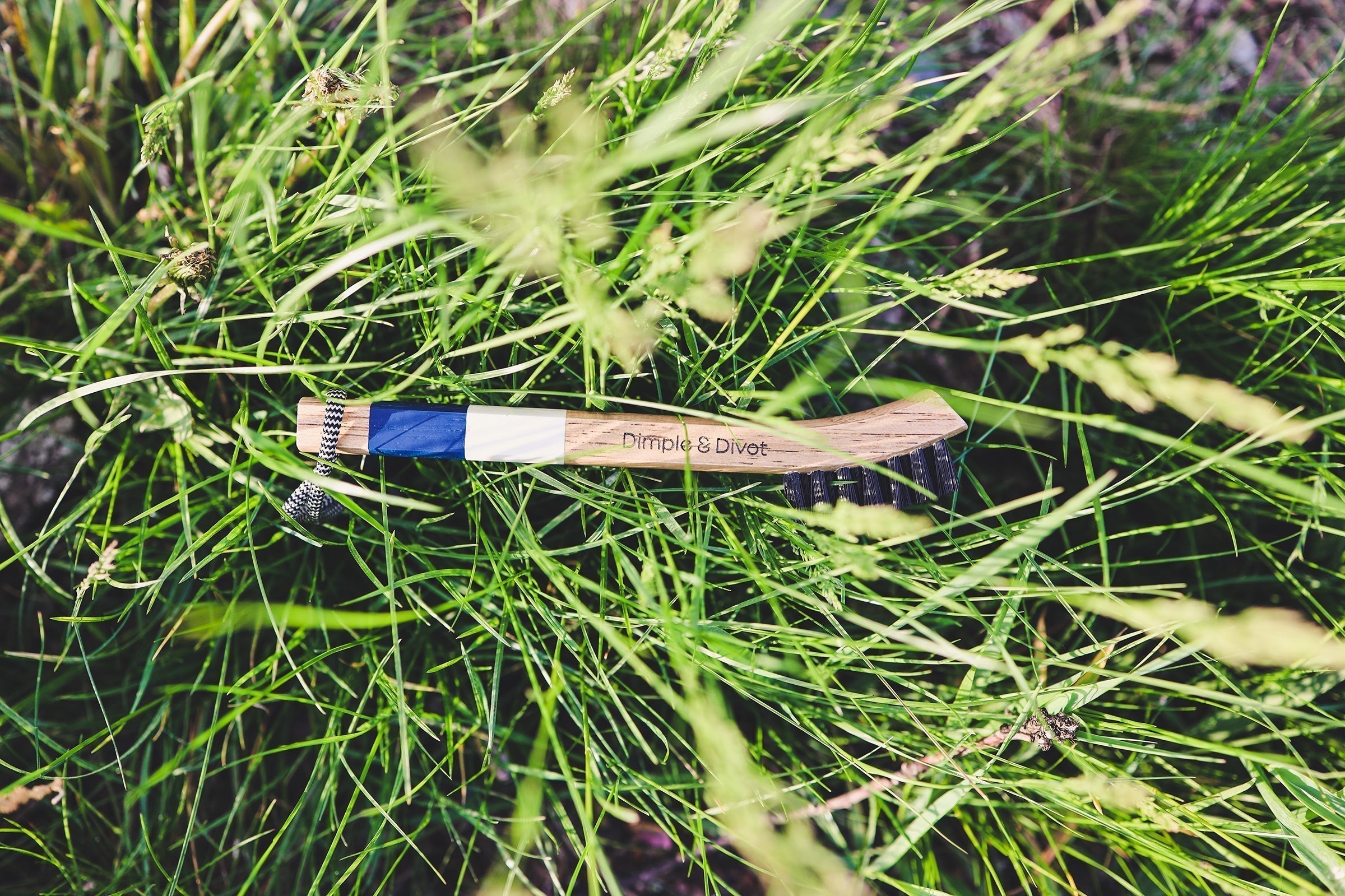
The Dimple & Divot hickory brush is made from American hickory with nylon bristles matched to standard iron and wedge groove dimensions. It's built to be used on the bag, during a round, every round — not pulled out of the garage occasionally when things look particularly bad.
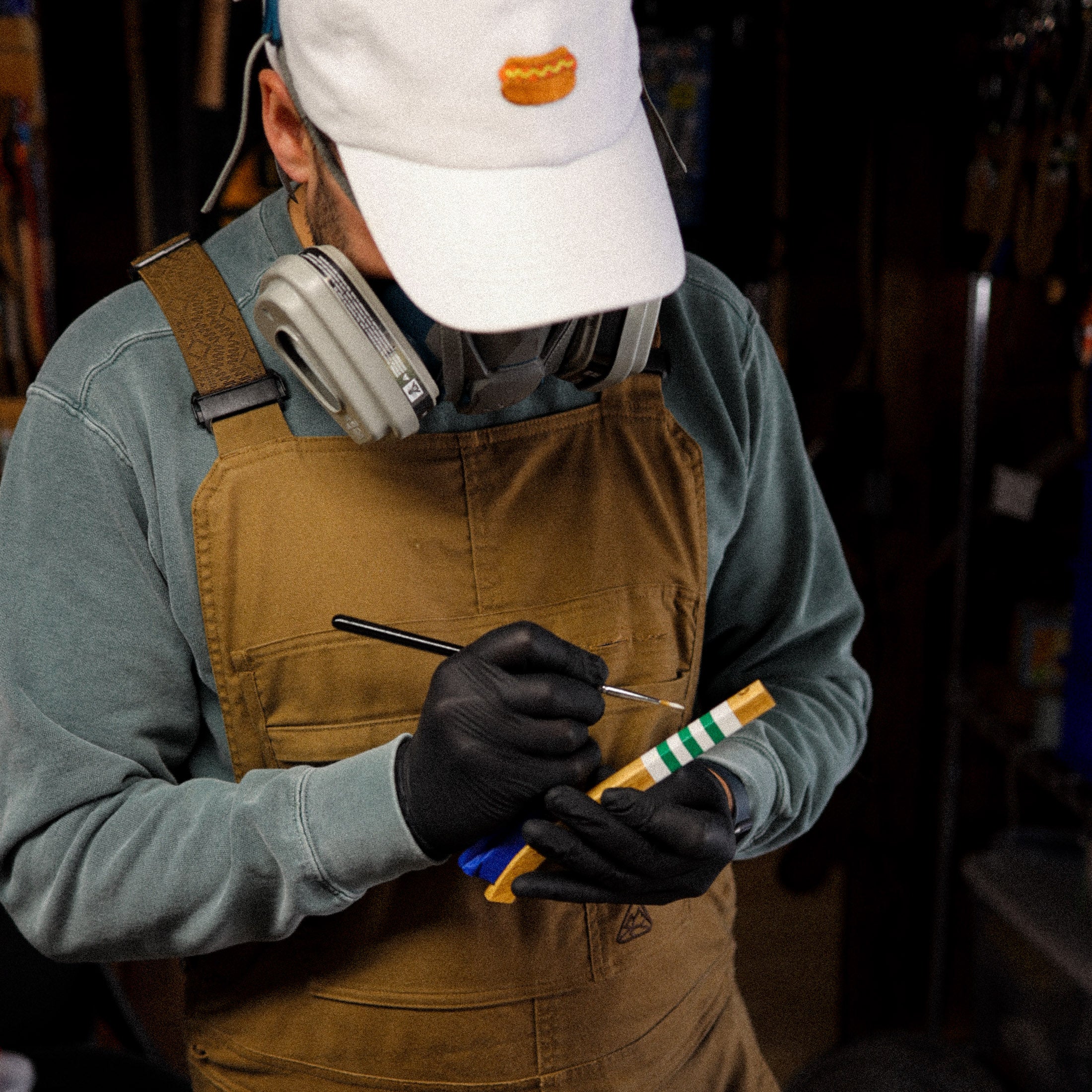
It's also made in the USA. Not as a footnote. As the reason it holds up. Most brushes are an afterthought. This one wasn't.
The last brush you'll ever buy.
American hickory. Nylon bristles. Built for seasons, not rounds.

Leave a comment
This site is protected by hCaptcha and the hCaptcha Privacy Policy and Terms of Service apply.